letsbike
Well-Known Member
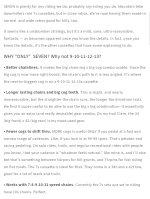
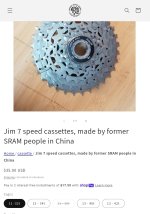
Just for fun I went looking for 7 speed cassettes and found these at Rivendell in California. I've never seen anything like these sizes. Probably a vintage derailleur would be only capable of the 32T sprocket.

Letsbike, thanks for this - it is reassuring to know that the existing cogs will do the job. Its all a bit new to me, and I appreciate the guidance. Cheers!That set up of a 22T chainring and 28T large cog will give you a 21.2 gear inch low which should suit your needs. If you can find a cassette with a 30T rear cog that will get you down to 19.8 inches. Two things of note: The smaller a chainring is the faster it wears (although you just use it for steep climbs). Also 7 speed and 8 speed cassettes are disappearing. Any 7 speed cassettes on the mass market are intended for inexpensive recreational bicycles.
Thank you, Willmill. Easier is always better! For context, I am over 70 years, and live on a Gulf Island off Canada's west coast. So my anticipated range is down to California and east through the Rockies. The options you describe and the sources are most appreciated, and I shall follow up. Hauling 75 lbs of bike and gear will be quite different from flitting around on a light weight mountain bike, so I anticipate needing all the mechanical help I can get! Cheers!The Coda 22/32/44 is a great crank and optimal for loaded touring. For the rear freewheel, I found the 28T max cog too small, and for the touring you are describing, I'd replace it with a 13-32T from IRD or get a cheap one from Shimano and plan on replacing more often. But I guess it depends on where you're touring. Stock gearing is probably fine for eastern Canada. When I was 25 years younger (and stronger) and toured western US and Canadian mountains on a rig that was 20 lbs less than yours (total rider + bike + gear), I swapped the stock cassette for an 11x32T. There are steep grades where spinning the granny (22T) and the big cog (32T) was better on the knees (and the 28T cog was not *quite* enough). I find that pedaling a 75-lb bike (bike + luggage), I can't just stand and hammer up hills the way I do on a 20-lb road bike -- better to reduce strain and go to a lower gear and spin seated. But that's me. BTW, letsbike is right: if the 1994 T1000 still has the original Shimano XT 7-spd rear derailleur, then 32T is the "official" max cog (I know folks who also use a 34T max cog, being careful not to "cross up" the chain).

Thanks, Willmill. I plan to order the 13-32 IRD as soon as I have the bike.What a beautiful part of the continent. Well, in that case, I'd strongly urge you to "upgrade" to a bigger-cog freewheel. I was reminded of something else: I can't tell you how many times when I was riding the Pacific Coast Highway that it seemed the final mile to the campground was straight up hill. Nice to have the 32T cog for the final mile when the legs are tired after several back-to-back 75-mile days.
JohnnyD, thank you for sharing your experience and observations. I am going with the IRD 13-32 cassette as soon as I take possession of the bike. I will seek out saddle height and position advice from some knowledgeable folks. All good advice, and I thank you!From my experiences riding the Cascade moutains in Oregon with a 3 x 7 drivetrain with a 13-30 cassette, I can attest that you'll want the just a little bit extra that a 32 or 34T will give you when climbing long steep grades. The other tip is to make sure you have your saddle height and position set correctly. Your knees will thank you for that at the end of a long day of riding, not to mention your back.
letsbike, Just saw this post of yours, for which I thank you. Since the cassette would give a lower gear than the 13-32, I am changing my thought about the latter in favour of the 11-32. What derailler would you suggest to go up to a 34?Just for fun I went looking for 7 speed cassettes and found these at Rivendell in California. I've never seen anything like these sizes. Probably a vintage derailleur would be only capable of the 32T sprocket.
If the bike you are looking at has a Shimano XT rear derailleur it should handle a 34T cog. I am running a vintage 2005 Shimano 105 long cage derailleur and it works fine with a 34T low. Just make sure your B screw is properly set.letsbike, Just saw this post of yours, for which I thank you. Since the cassette would give a lower gear than the 13-32, I am changing my thought about the latter in favour of the 11-32. What derailler would you suggest to go up to a 34?
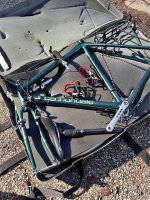
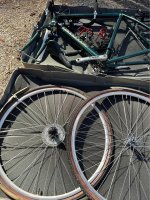
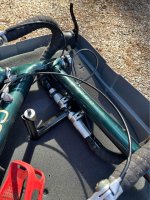
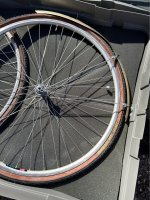
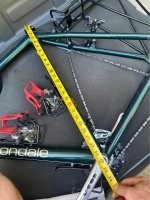
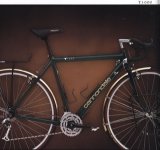
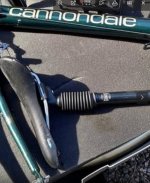
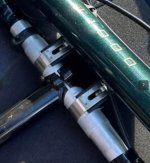
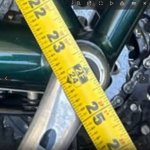
Letsbike, Thank you for this. I just made the deal on the bicycle today and will check out the rear derailleur once I actually have it in hand. Here are a few photos from the seller's ad - Cheers!If the bike you are looking at has a Shimano XT rear derailleur it should handle a 34T cog. I am running a vintage 2005 Shimano 105 long cage derailleur and it works fine with a 34T low. Just make sure your B screw is properly set.
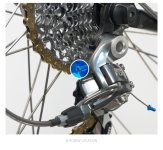
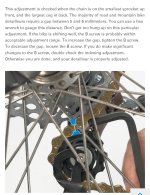
The following pictures are from the Park Tool website.

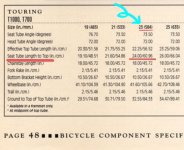
22/28 low gear should get you close to walking speed. I would suggest that you try to pare down the weight of the gear you are carrying. I've hosted a lot of touring cyclists and I doubt any were carrying 75 lbs of cargo.I see the specs on the 1994 Cannondale T1000 are as follows:
"Rear Cogs Shimano Hyperglide 11-28 7 speed; and
Crank CODA 22, 32, 44 custom anodized rings"
Given the comments / observations of Letsbike and Willmill above,
How would you rate the gear ratios for getting a senior 200 lb rider and 75 lb bike and gear over a mountain pass,
and if these aren't optimal, than what changes would you suggest?